
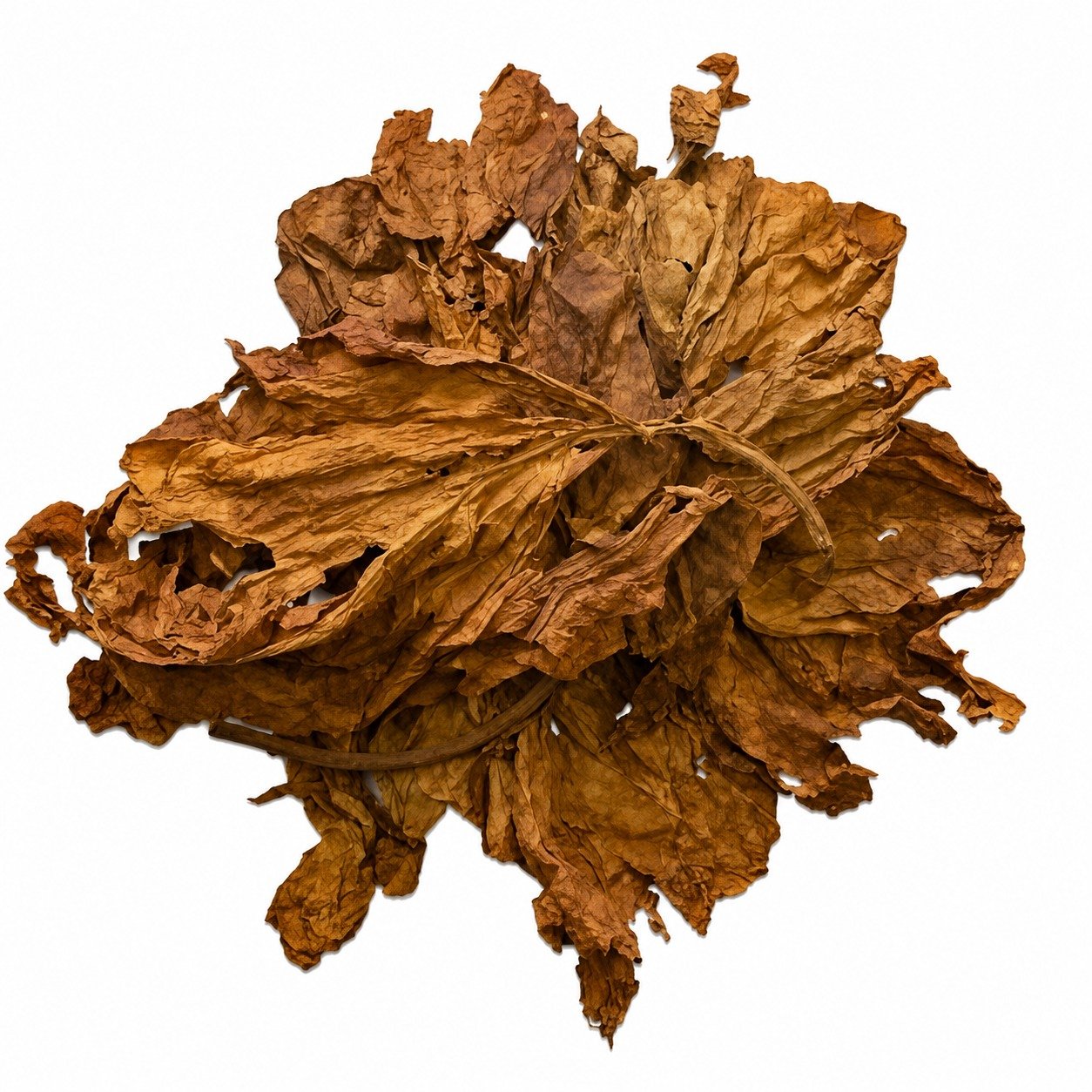
Virginia / Cigarette Tobacco
Virginia tobacco, also known as Cigarette Tobacco, is mainly grown in the Khyber Pakhtunkhwa (KPK) province of Pakistan. It is cultivated in two major regions:
Plain Areas
Charsadda, Mardan, Swabi, Nowshera, and Malakand Agency
- Area: 20,000+ hectares
- Production: 48 million kg+
- Chemical Composition: Nicotine (1.3–2.5%), Reducing Sugar (9–16%), Chloride (0.75–0.90%)
Sub-Mountain Areas
Buner and Mansehra
- Area: 6,000+ hectares
- Production: 12 million kg+
- Chemical Composition: Nicotine (1.3–2.8%), Reducing Sugar (12–18%), Chloride (0.60–0.80%)
- Texture: Medium to open-grained with a firm leaf structure.
- Usage: Mainly used in the production of cigarettes.
- Soil & Season: Grows best in loamy soils, with the cultivation season extending from March to September.
- Production Control: Crop production is regulated according to the demand from tobacco companies. The final crop size is determined after official demand figures are announced.
- Grower Practices: Farmers raise their own nurseries, construct conventional curing barns, and curing is carried out by experienced curers/firemen.
- Economic Importance: Virginia tobacco is an important cash crop that meets local industry requirements, with a portion of the production exported to international markets.
- Support: Growers receive continuous technical guidance and support from the Tobacco Board to maintain quality and promote sustainable cultivation.